
Your Roof Beneath The Surface
Understanding the IMportance Of Synthetic Underlayment For Your Roof
Waterproofing From The First Layer
The foundation to building stronger homes in coon rapids starts here
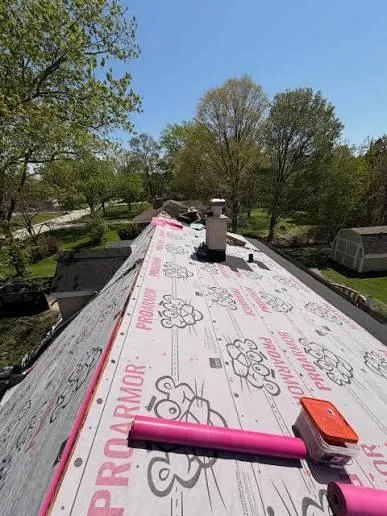
Synthetic underlayment is the protective layer installed between your roof decking and the shingles. It is not visible once the roof is complete, but it is one of the most important components in the system. Synthetic underlayment resists moisture, holds up to foot traffic during installation, and serves as the last line of defense against water intrusion if shingles are ever lifted or damaged. It replaced the older felt paper standard because it performs better under virtually every condition a roof in Minnesota encounters.
Stronger Homes across central MN and Western WI
Roofing Solutions Built to Last
Clear Communication From Start to Finish: A roof should do more than look good from the street. We focus on roofing systems designed to handle Minnesota weather year after year while helping reduce long-term repair costs.
Roofing Solutions That Age Better Over Time: Small details during installation can have a big impact years later. Our process focuses on preventing common problems like premature shingle wear, moisture buildup, and ventilation issues before they start.
Quality That Starts Before Installation Begins: Even the best roofing materials can fail early if installed incorrectly. Proper ventilation, flashing, underlayment, and drainage all play a major role in how long a roof lasts.
Breaking Down Your Roofing System, Starting At The bottom
Why Synthetic Underlayment is critical for coon rapids homes
Traditional felt underlayment, sometimes called tar paper, was the standard for decades. It is made from a cellulose or fiberglass mat saturated with asphalt. Synthetic underlayment is woven from polypropylene or polyethylene and does not absorb moisture the way felt does. Felt absorbs water and can wrinkle, tear, or deteriorate during installation if it gets wet. Synthetic underlayment sheds water, handles foot traffic without tearing, and maintains its integrity across a wide range of temperatures. In Minnesota, where material performance across freeze-thaw cycles matters, synthetic consistently outperforms felt.
Understanding Your Underlayment
A finished roof is a layered system. The decking boards form the structural base. On top of the decking goes the underlayment, covering the entire field of the roof. On top of the underlayment go the shingles. The underlayment's job is to seal the decking against moisture in two scenarios: during installation before shingles are applied, and after installation if shingles are ever compromised by wind, impact, or age.
Ice And Water Shield Vs Synthetic Underlayment
These two products serve different purposes and are used in different locations on the same roof, with both being crucial steps in understanding the roof replacement process. Ice and water shield is a self-adhering membrane applied in the valleys of the roof and at the eaves, extending at least 24 inches up from the eave line. It protects the most vulnerable areas against ice dam formation and driven rain. Synthetic underlayment covers the rest of the roof field. A properly built roof uses both, not one or the other.
The Limitations Of Your Underlayment
Underlayment is not a finished roofing surface and is not designed for long-term UV exposure. If shingles are removed and the underlayment is exposed to direct sun for an extended period, it will degrade. Underlayment also does not replace proper flashing at penetrations, intersections, and edges. Thinking of it as the roof is a misunderstanding of how the system works. It is a critical layer within a system, not a substitute for any other component.
What To Ask About When Getting An Estimate
Ask any contractor you are considering what underlayment product they use and whether ice and water shield is included in the scope at the eaves and valleys. A bid that uses felt underlayment to reduce cost is a bid that uses inferior material. A bid that does not separate these two products as distinct line items may not be applying both correctly.
The Timber Exteriors Approach
Every roof we install includes synthetic underlayment over the full field and ice and water shield at the eaves and valleys. These are not upgrades. They are the standard we build to on every project in Coon Rapids and across Anoka County.
What this means for you
How timber exteriors approaches roof replacements
ways we can help:
Provide A Thorough 16-Point Inspection: It’s almost impossible to spot most roofing problems from the ground. Our team walks the entire property, including the attic, to fully inspect the roof, identify any potential risks, and understand the full scope of your property.
Detailed Reporting & Documentation: We capture detailed photos and compile them into a clear report. After the inspection, we explain our findings in simple terms and walk through repair and replacement options so homeowners can make informed decisions without pressure.
Project Planning & Communication: Before work begins, we review timelines, materials, scheduling, and project expectations so homeowners always know what comes next during the process.
Final Walk-Through & Ongoing Support: Once the project is complete, we perform a final walkthrough, answer any remaining questions, and remain available for future support and maintenance needs.
FAQs
Questions to Ask Before Calling
Does the type of underlayment affect my shingle warranty?
Yes in some cases. Certain manufacturer warranty programs require that their certified products be installed with specific underlayment types to qualify for the enhanced warranty. This is one reason why material selection and installation practices are connected, and why asking your contractor about warranty qualifications is worth doing before the project starts.
How long does the insurance claim process take?
From filing to final payment, a straightforward claim with no supplementing typically takes four to eight weeks. Claims that require supplementing for missed items take longer depending on how quickly the carrier processes the additional documentation. Scheduling the work itself depends on contractor availability after the scope is approved.
How long does synthetic underlayment last?
Synthetic underlayment installed beneath shingles is protected from UV exposure and can last the life of the shingle installation above it, which is 25 to 30 years for architectural shingles. If exposed to sunlight, it degrades significantly faster and should not be left exposed for more than a few weeks.
Our Service areas
Stronger Homes. Stronger COmmunities.
Blaine MN
Anoka MN
Andover MN
Circle Pines MN
St. Paul MN
Twin Cities MN
Ham Lake MN
Roseville MN
Fridley MN
Spring Lake Park MN
Arden Hills MN
Hudson WI
Eau Claire WI


Timber exteriors delivers high-quality roofing, siding, windows, gutters, and storm damage restoration for homeowners throughout coon rapids and the surrounding Twin Cities.
© Copyright 2026. Timber Exteriors . All Rights Reserved.